Crawl space problem
Water in the Crawl Space: Why It Happens and What Fixes It
A wet crawl space after a storm is telling you something specific about how water moves around your house. Reading that signal correctly is what separates a lasting repair from a plastic sheet over a puddle.
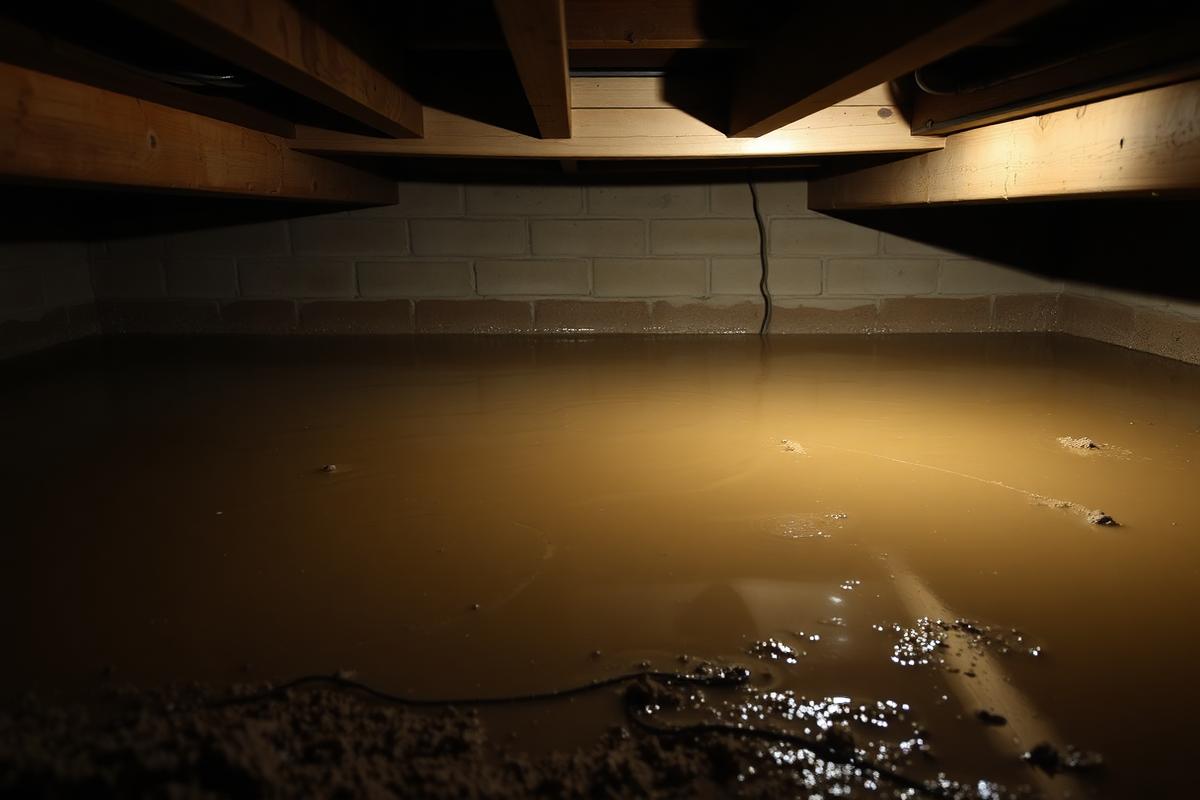
What the timing tells you
- Water within hours of rain, gone in a day or two: surface runoff. Gutters, downspouts, grading and hardscape are the first suspects.
- Water that arrives slowly and lingers for weeks: groundwater. A high water table or saturated clay is pushing moisture up through the soil.
- Water with no rain at all: plumbing. Supply lines, drain lines, water heaters and HVAC condensate lines all leak into crawl spaces.
- Wet only on one side of the house: a localized grading, downspout or slope issue on that elevation.
Why Georgia crawl spaces take on water
Red clay is the recurring factor. It absorbs slowly and drains slowly, so rain that falls faster than the soil can accept it runs along the surface — often straight toward the foundation. Add convective summer storms that drop an inch or more in under an hour and shallow original grading, and water reaching a crawl space is unsurprising.
Older homes compound it. Many were built with short downspout discharges, no perimeter drainage and only thin plastic on the ground, which does nothing once water is running underneath the house.
What a wet crawl space does over time
- Keeps relative humidity high, which condenses on ducts and joists
- Saturates insulation until it sags and drops out
- Creates the conditions behind damp, mold-related growth on framing
- Produces the musty odor that reaches the living space
- Corrodes duct straps, fasteners and metal components
Have Water Under Your Home?
Send us what you're seeing and when it appears. That timing usually points straight at the source.
Get a Free Crawl Space EstimateHow the problem is fixed
- 1Trace the entry point using staining, silt lines and flow paths inside the crawl space.
- 2Correct exterior water delivery: extend downspouts, re-slope soil away from the foundation.
- 3Rule out plumbing and condensate leaks before designing drainage.
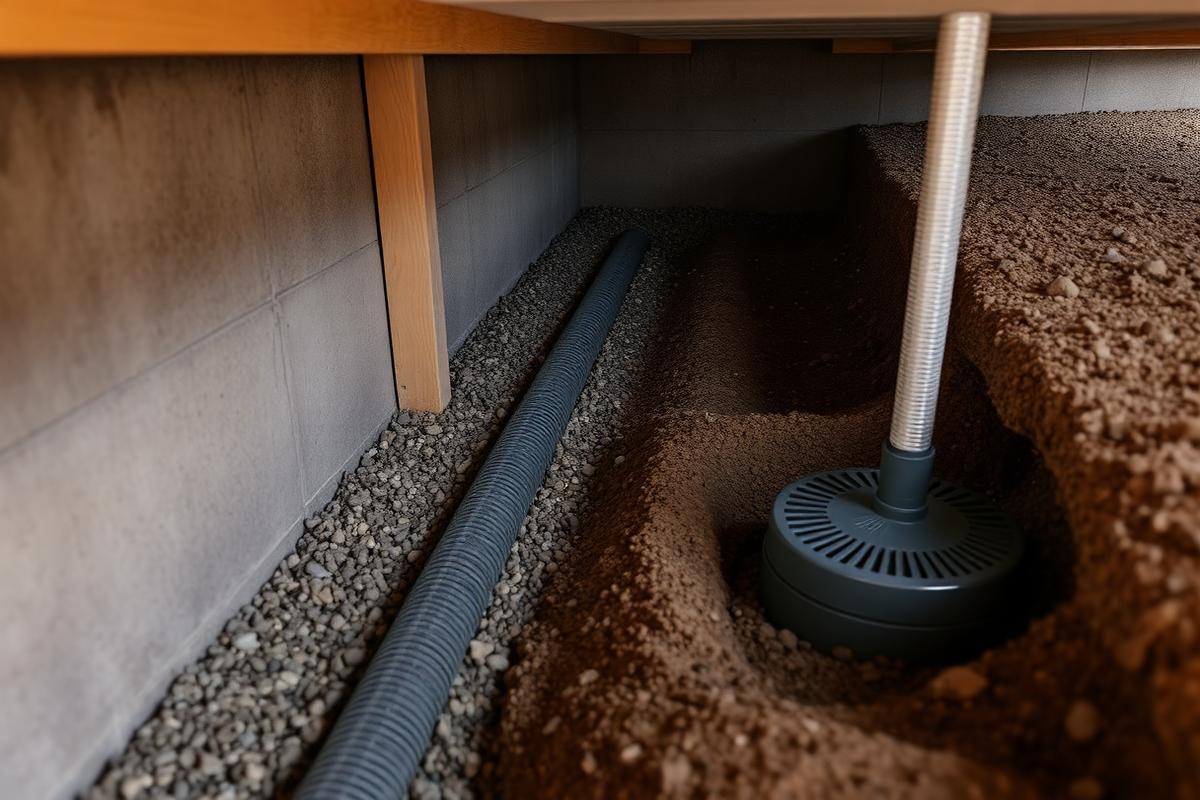
- 4Install perimeter drainage and a sump where water still reaches the space.
- 5Seal the soil with a reinforced vapor barrier once the space stays dry.
- 6Add humidity control and complete encapsulation.
What you can check yourself today
- Walk the perimeter during rain and watch where water sheets toward the house
- Confirm every downspout discharges several feet away, not at the wall
- Look for soil that slopes back toward the foundation, especially near patios and driveways
- Open the crawl space hatch and note where staining is highest on the walls
- Check the water heater pan and the HVAC condensate line for drips
Water in crawl space FAQs
- Is a little water in the crawl space normal after heavy rain?
- No. Damp soil is common; visible water is not. Water that appears after storms means runoff or groundwater is reaching the space faster than the site can move it away.
- How urgent is it?
- Water itself is rarely an emergency, but the humidity that follows keeps working on the framing, ducts and insulation continuously. The sooner the source is identified, the smaller the repair scope stays.
- Will a sump pump alone solve it?
- A pump removes water that has already arrived. It is effective when paired with drainage that channels water to the basin and exterior corrections that reduce how much arrives at all.
- Should I put down plastic first?
- Not while water is still entering. A liner over wet soil traps water beneath it and hides the problem. Drainage comes first, then the barrier.
Related pages
Free estimate
Tell us what's happening under your house
Crawl space pricing depends on square footage, access, moisture source and how much repair work the framing needs. We inspect first, then quote the scope that actually solves the problem — not a package chosen before anyone looked.
- On-site inspection of drainage, grading, vapor barrier and framing
- Humidity and moisture readings where they matter
- Written scope showing what is required and what is optional