Thermal envelope
Crawl Space Insulation in Georgia
Insulation hanging out of the joists is one of the most common sights under a Georgia home — and it is almost always a moisture story before it is an insulation story. We fix the cause, then rebuild the envelope correctly.
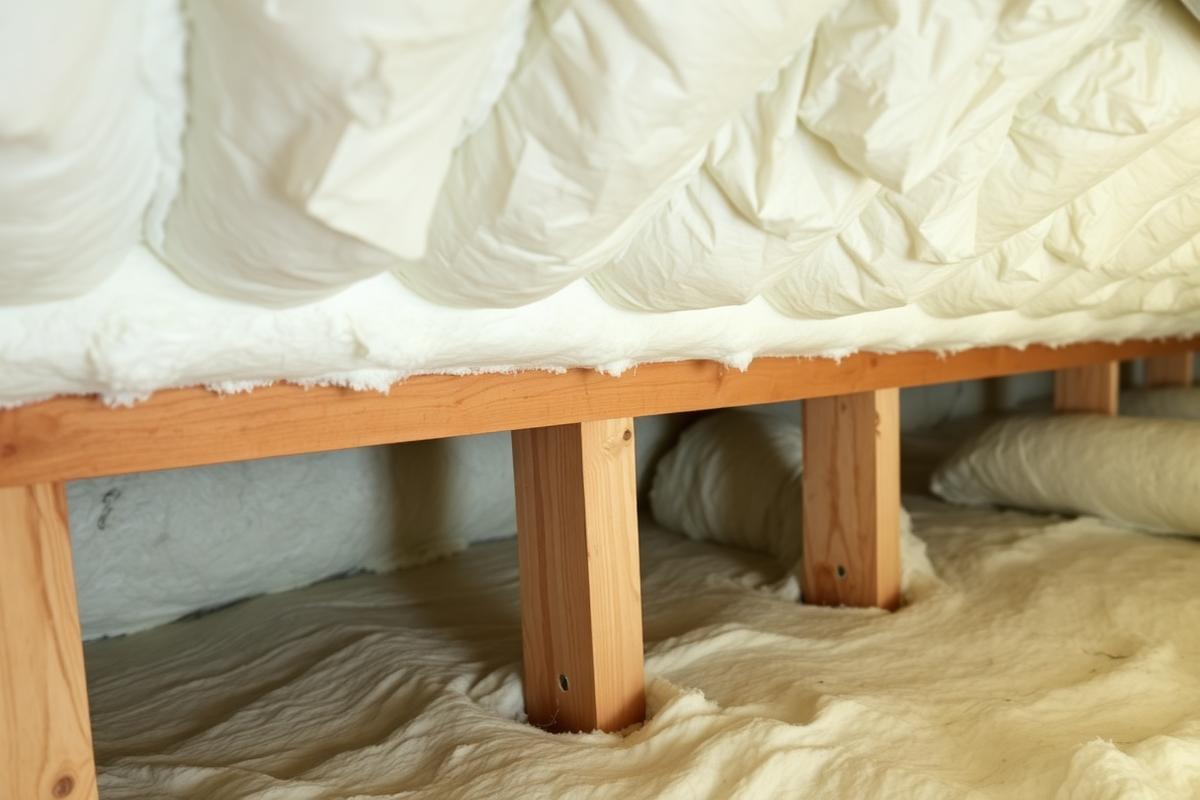
Why insulation fails under Georgia houses
Fiberglass in a vented crawl space sits in exactly the wrong conditions: humid air moving through it, cool sub-floor above it and damp soil below. It absorbs moisture, sags under the added weight and eventually drops out of the joist bays entirely.
Once it is damp, it does very little thermally and keeps moisture in contact with the wood it is pressed against. Replacing it without changing the environment simply resets the clock.
Two approaches, depending on the crawl space
- Vented crawl space: insulation between the floor joists, supported properly, with the ground covered by a vapor barrier. Appropriate when the space will remain vented.
- Sealed crawl space: insulation on the foundation walls and rim joist, with the floor left uninsulated so the crawl space is inside the conditioned envelope. This pairs with encapsulation and humidity control.
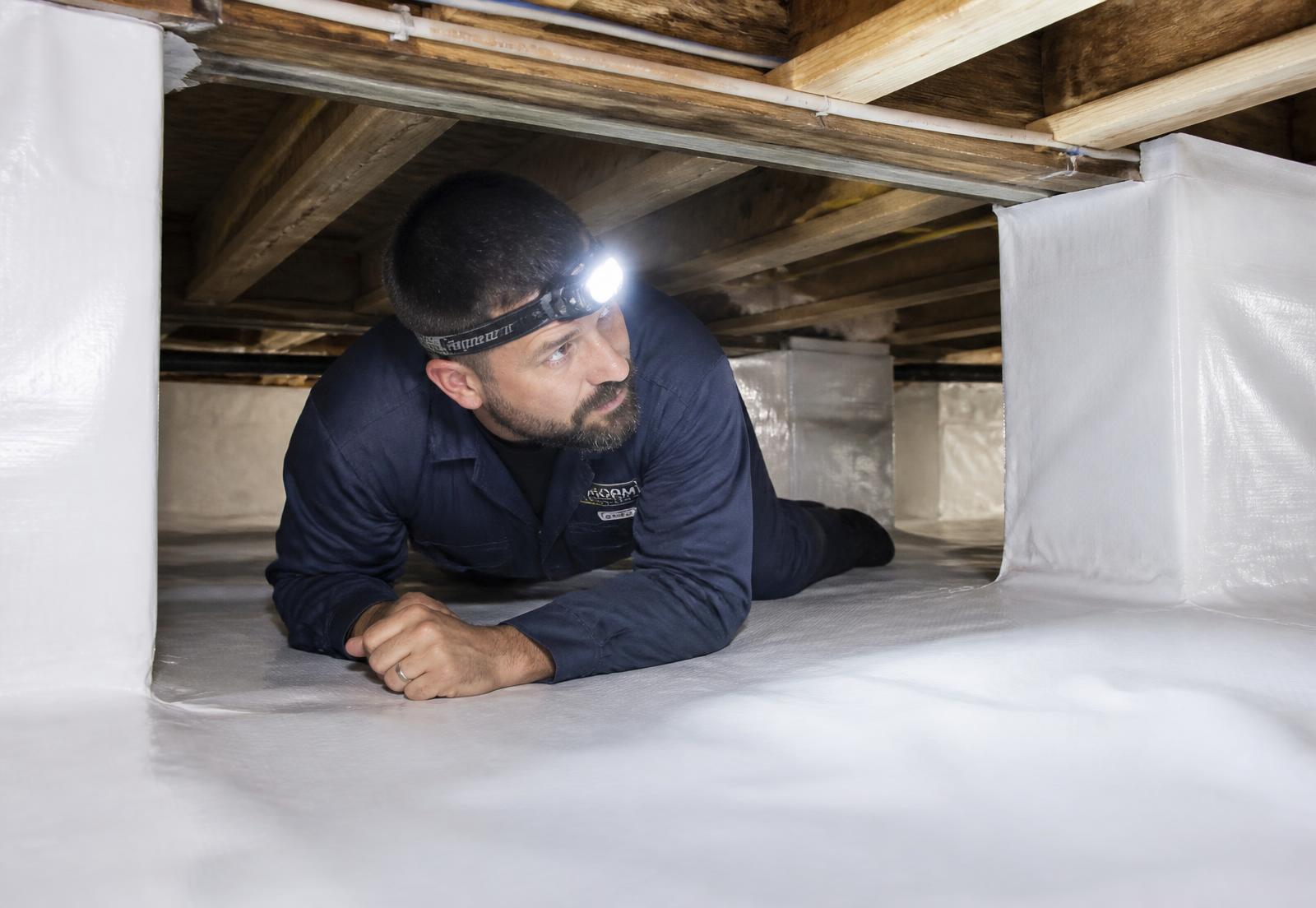
How we approach an insulation project
- 1Assess humidity and identify why the existing insulation failed.
- 2Remove damaged, wet or fallen material and dispose of it.
- 3Correct the moisture source: drainage, barrier, sealing or a plumbing repair.
- 4Repair any sub-floor or framing damage found once the bays are open.
- 5Install insulation in the arrangement that matches the crawl space strategy.
- 6Air-seal the rim joist and access hatch to stop bypasses.
Insulation Falling Out of Your Joists?
That is a moisture signal. We check the humidity and the barrier before quoting replacement material.
Request an InspectionComfort and duct performance
Cold floors in winter and warm floors above a hot crawl space are the comfort complaints homeowners raise most. Where supply ducts run through the crawl space, the temperature of that space affects the air delivered upstairs — one more reason a sealed, insulated crawl space usually outperforms a vented one in this climate.
Cost factors
- Square footage of floor or linear feet of foundation wall to cover
- Volume of old insulation requiring removal and disposal
- Material type and R-value specified
- Sub-floor or joist repairs uncovered during removal
- Access and clearance in the crawl space
Crawl space insulation FAQs
- Should insulation go in the floor or on the walls?
- In a vented crawl space, insulation goes between the floor joists. In a sealed crawl space, insulating the foundation walls and rim joist instead brings the space inside the building envelope, which is generally the better performing arrangement in Georgia.
- Why does my crawl space insulation keep falling down?
- Fiberglass batts absorb moisture, gain weight and lose their grip. Repeated sagging is a moisture symptom, not a fastening problem — correcting humidity is what stops it.
- Can wet insulation be dried and reused?
- We do not reuse it. Batts that have been saturated hold contamination and rarely recover their original performance, and reinstalling them puts damp material right back against the sub-floor.
- Will crawl space insulation lower my power bill?
- It can reduce heat transfer through the floor and around ductwork, which helps. We describe the expected benefit honestly rather than promising a specific percentage, since results depend on the house.
Related pages
Free estimate
Tell us what's happening under your house
Crawl space pricing depends on square footage, access, moisture source and how much repair work the framing needs. We inspect first, then quote the scope that actually solves the problem — not a package chosen before anyone looked.
- On-site inspection of drainage, grading, vapor barrier and framing
- Humidity and moisture readings where they matter
- Written scope showing what is required and what is optional