Humidity control
Crawl Space Dehumidifier Installation in Georgia
Sealing stops moisture from getting in. A dehumidifier handles what is already there — and in Georgia's long humid season, it is what keeps a sealed crawl space genuinely dry rather than merely covered.
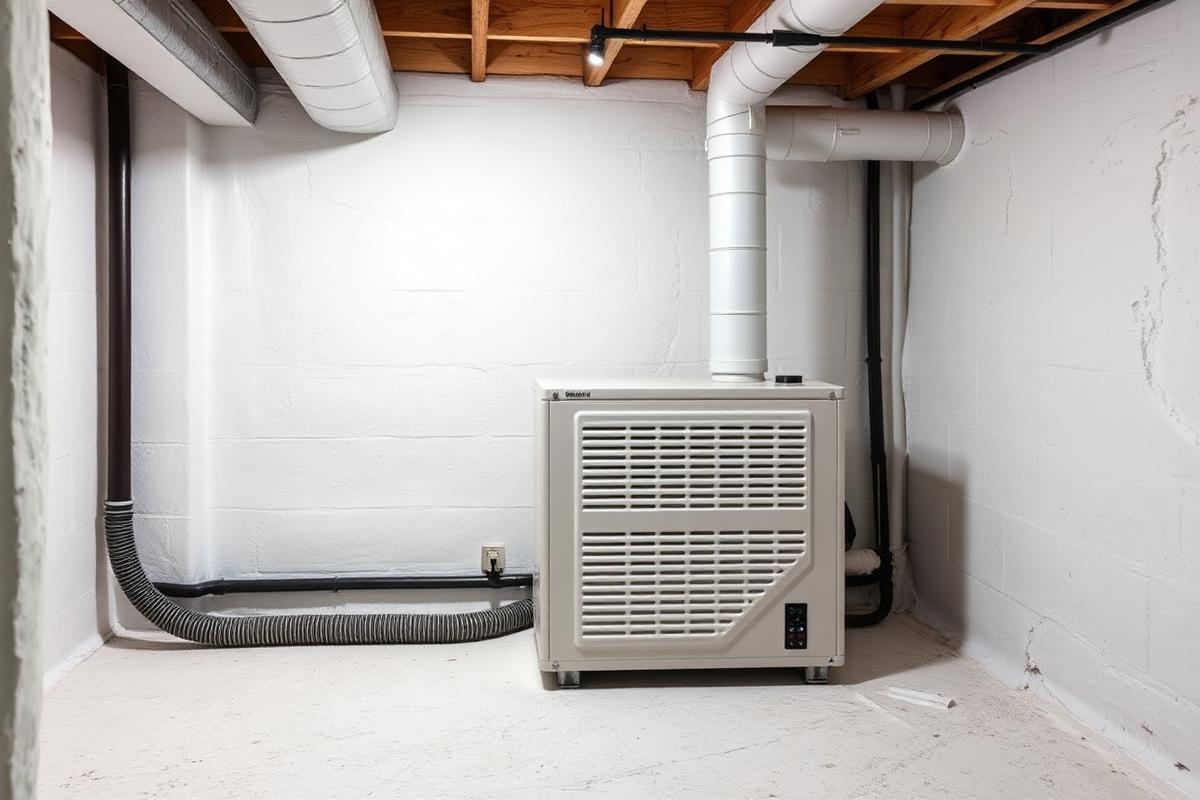
Why sealed crawl spaces need humidity control
Once the vents are closed, the crawl space no longer exchanges air with outside. That is the goal — but the moisture already in the soil, the framing and the air still needs somewhere to go, and in a humid climate it will not simply dissipate.
A dehumidifier gives that moisture a destination. Running on a humidistat, it removes water from the air and drains it away, holding the space in a range where wood stays dry and condensation stops forming on ducts.
Sizing and placement
- Capacity is matched to the crawl space volume and its typical moisture load, not chosen off a shelf.
- The unit is positioned for airflow across the space and for a workable drain route.
- Units are hung or set on a stand above the liner so nothing sits in contact with the ground.
- Condensate drains by gravity where the slope allows, or by a small pump where it does not.
- A humidistat sets the target, so the unit cycles rather than running continuously.

Installation process
- 1Measure current relative humidity and take wood moisture readings.
- 2Confirm the space is sealed — barrier, walls, vents and rim joist.
- 3Size the unit to the volume and moisture load of the crawl space.
- 4Set the unit, run condensate drainage and provide a dedicated power connection.
- 5Set the humidistat target and verify the unit cycles correctly.
- 6Re-check readings after the space has had time to stabilize.
Humidity Staying High Under the House?
We take readings before recommending equipment, so you are not buying capacity you do not need.
Request an InspectionWhen a dehumidifier is the wrong first purchase
A dehumidifier fighting an open vent, a torn barrier or a wet floor will run constantly and still lose. If you have standing water, resolve drainage first. If the plastic is shredded, start with vapor barrier installation. The unit is the last step in the sequence, not the first.
Cost factors
- Unit capacity required for the crawl space volume
- Distance and method of condensate drainage, including whether a pump is needed
- Electrical work required to reach the unit location
- Whether sealing work is being completed in the same project
Crawl space dehumidifier FAQs
- What humidity level should a crawl space stay at?
- A commonly used target is roughly 50–60% relative humidity. Below that range materials stay dry; sustained readings above it are where condensation and material problems begin in a Georgia summer.
- Can a household dehumidifier work in a crawl space?
- A portable room unit is not built for the temperatures, dust and continuous duty of a crawl space, and its bucket has to be emptied. A dedicated crawl space unit with a gravity or pumped drain line is the practical solution.
- Does the dehumidifier run all the time?
- No. It cycles on a humidistat, running more in humid months and much less in winter. Sealing the space first is what keeps runtime and energy use reasonable.
- Where does the water go?
- To a gravity drain, an existing sump basin or a small condensate pump discharging outside. The drain route is planned during the estimate.
- Do I still need a dehumidifier if I have a vapor barrier?
- Sometimes not. If post-sealing readings hold in range, no unit is needed. Where ducts run under the floor or the space has consistently high summer humidity, a dehumidifier is what keeps the readings stable.
Related pages
Free estimate
Tell us what's happening under your house
Crawl space pricing depends on square footage, access, moisture source and how much repair work the framing needs. We inspect first, then quote the scope that actually solves the problem — not a package chosen before anyone looked.
- On-site inspection of drainage, grading, vapor barrier and framing
- Humidity and moisture readings where they matter
- Written scope showing what is required and what is optional