Moisture barrier
Crawl Space Vapor Barrier Installation in Georgia
Bare soil under a house releases moisture around the clock. A properly specified, fully sealed moisture barrier cuts that source off — and it is the single most common thing we find missing, torn or improperly installed.
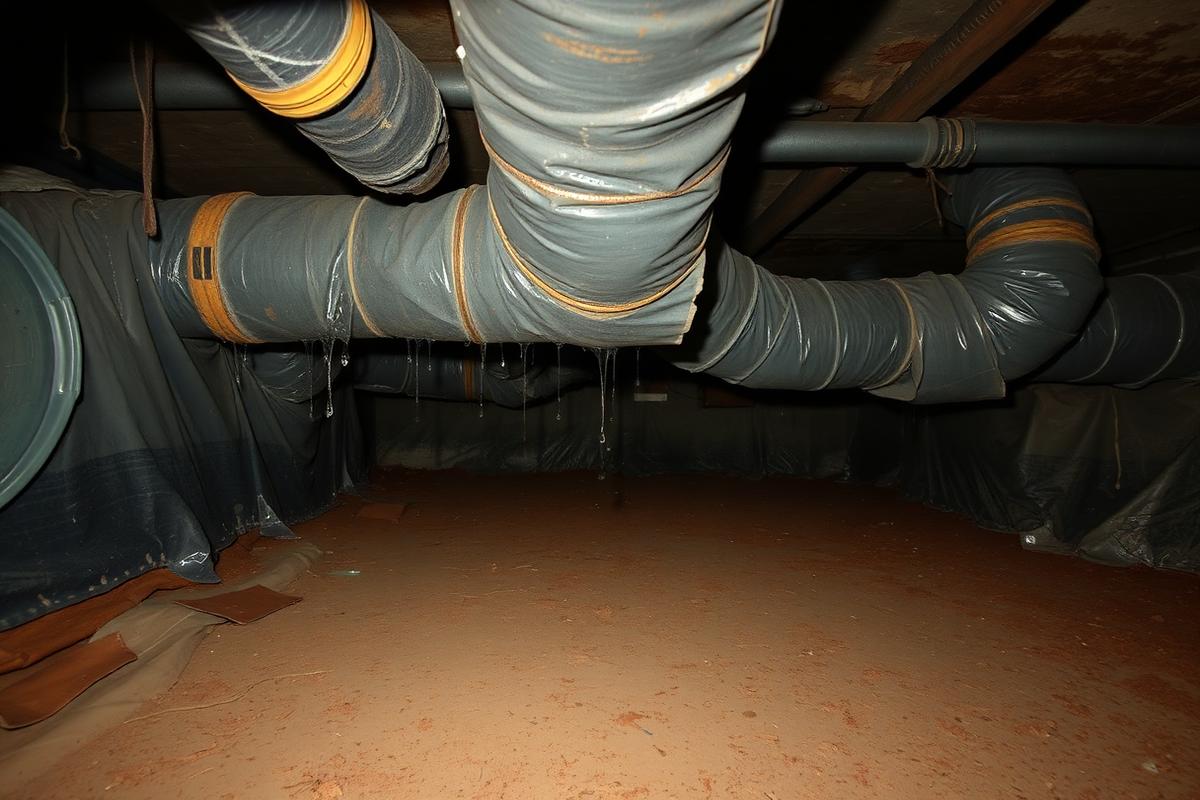
What a crawl space vapor barrier does
Soil is never dry in Georgia's climate. Even when the surface looks dusty, moisture keeps migrating upward and evaporating into the crawl space air. That vapor raises humidity, condenses on cool ductwork and joists, and keeps wood damp.
A vapor barrier — sometimes called a moisture barrier or crawl space plastic barrier — is a continuous sheet that blocks that migration. Continuity is the whole point: gaps at seams, around piers or at the perimeter let vapor bypass the sheet entirely.
Ground cover vs full encapsulation liner
Most homes we inspect have the first and need the second — particularly where ductwork runs below the floor and condensation is already visible.
- Basic ground cover. Thin sheeting laid loose over the soil, edges unsealed. Better than bare dirt, but it shifts, tears and leaves the perimeter open.
- Sealed liner. Reinforced material, overlapped and taped at seams, sealed around piers and penetrations, and run up the walls as part of full encapsulation.
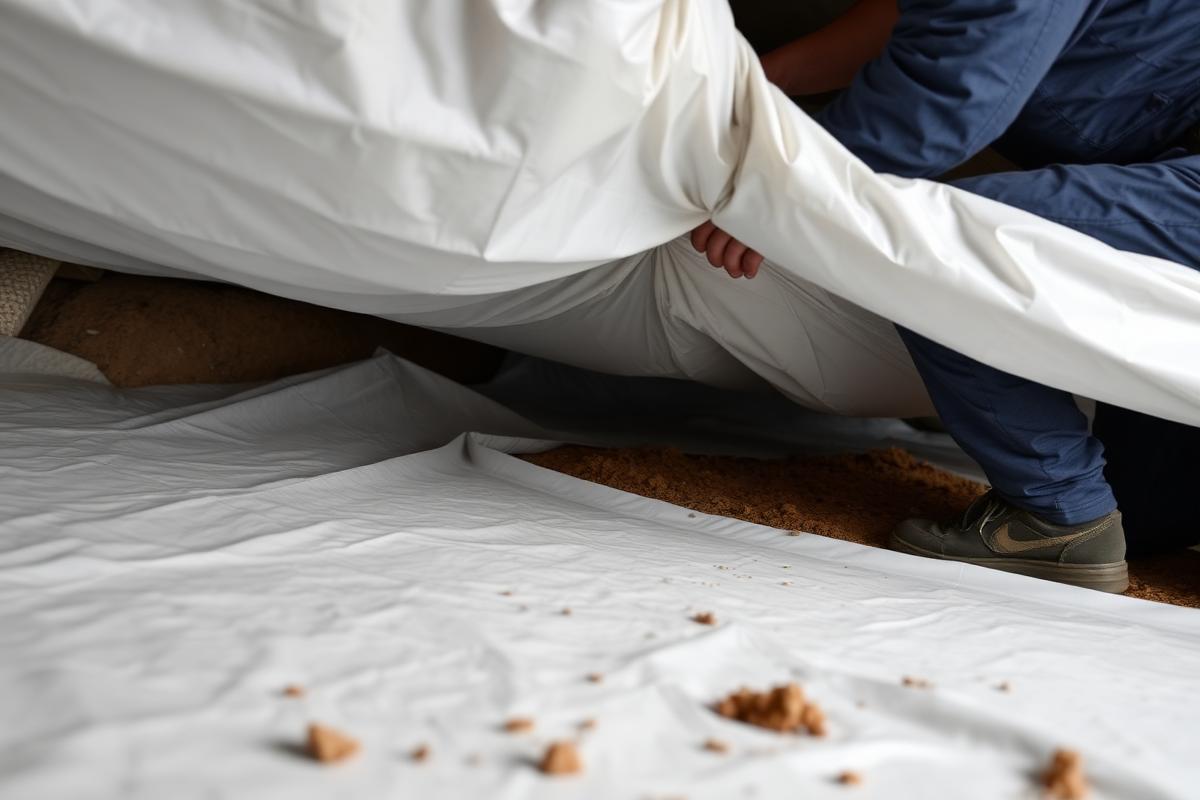
How the barrier is installed
- 1Clear debris, rocks and old sheeting; rake the soil smooth so nothing punctures the new liner.
- 2Lay the reinforced liner across the soil with generous overlaps at every seam.
- 3Seal seams with compatible tape so the surface is continuous.
- 4Wrap and seal around each pier so vapor cannot escape at the columns.
- 5Run the liner up foundation walls and terminate and fasten it below the sill.
- 6Seal at penetrations, the access hatch and any vent wells being closed.
Compare Your Crawl Space Options
Ground cover, sealed liner or full encapsulation — the right answer depends on your humidity readings and whether liquid water is present.
Request an InspectionSigns your existing barrier has failed
- Plastic bunched up, folded back or floating on standing water
- Bare soil visible between sheets or around every pier
- Condensation droplets on ducts or joists even though a barrier exists
- A damp, earthy smell that increases in warm months
- Insulation batts sagging above intact-looking plastic
Cost factors
Square footage, liner thickness, the amount of debris removal required, the number of piers to wrap and the crawl space clearance are the main drivers. Where the soil holds water, drainage has to be part of the same plan — see crawl space drainage and the cost guide.
Vapor barrier questions
- What mil thickness should a crawl space vapor barrier be?
- Basic ground cover is often 6-mil, but it tears easily and rarely lasts. Encapsulation-grade liners are typically reinforced and in the 12–20 mil range, which stands up to piers, rock and crawling traffic.
- Should the vapor barrier go up the foundation walls?
- For a sealed crawl space, yes. Running the liner up the piers and walls and terminating it below the sill closes the path that soil vapor takes around the edge of a floor-only cover.
- Can a new barrier be installed over the old plastic?
- We remove the old material. Trapped debris and torn sheeting prevent a clean, sealed installation and hide problems in the soil beneath.
- Is a vapor barrier enough on its own?
- In a dry crawl space with no liquid water and moderate humidity, a well-sealed barrier can be sufficient. Where humidity stays high through the summer, the barrier is one part of a system that also includes sealing and dehumidification.
Related pages
Free estimate
Tell us what's happening under your house
Crawl space pricing depends on square footage, access, moisture source and how much repair work the framing needs. We inspect first, then quote the scope that actually solves the problem — not a package chosen before anyone looked.
- On-site inspection of drainage, grading, vapor barrier and framing
- Humidity and moisture readings where they matter
- Written scope showing what is required and what is optional