Core service
Crawl Space Encapsulation in Georgia
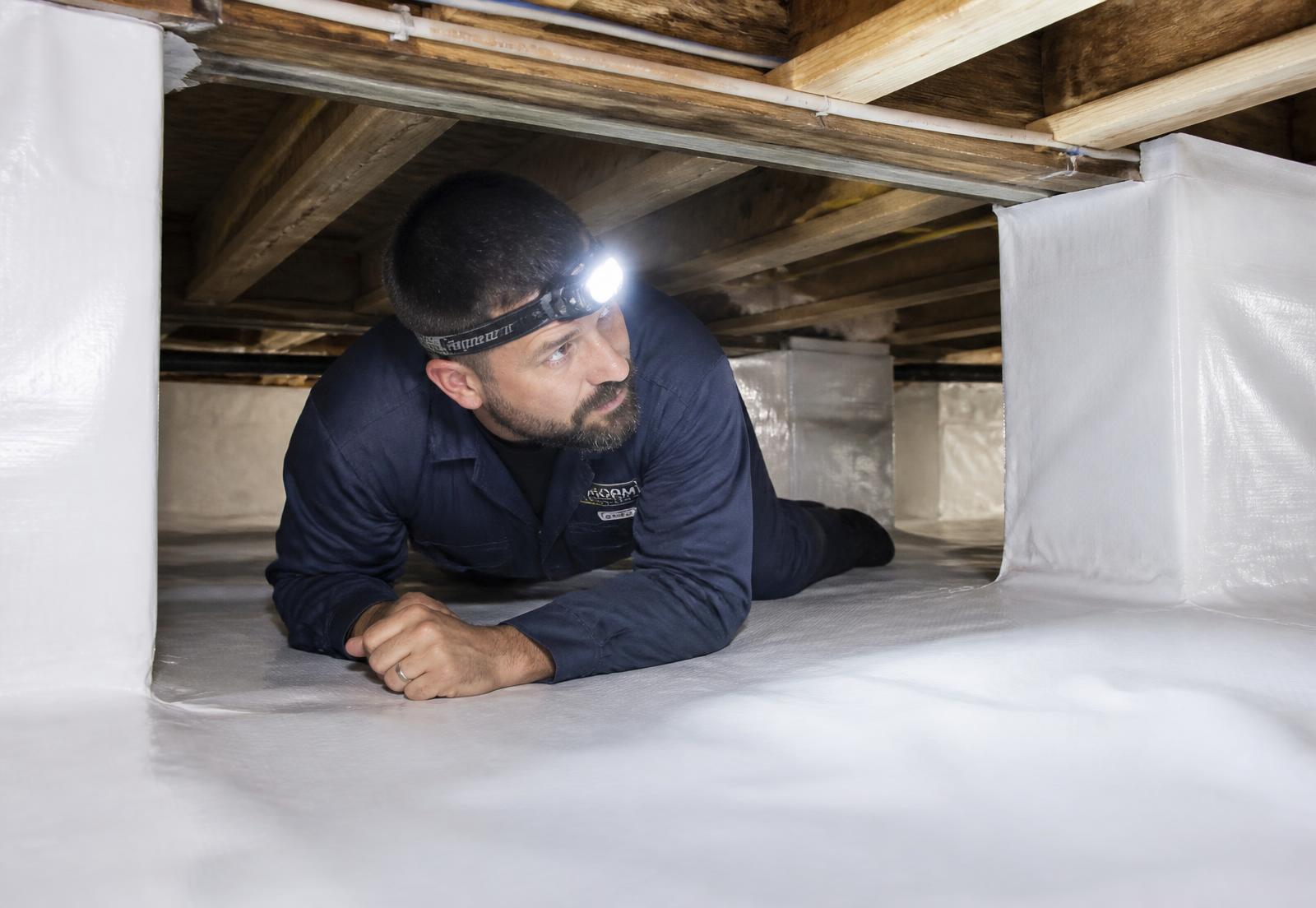
Encapsulation seals the crawl space from soil moisture and humid outside air, then keeps it that way with controlled humidity. Done in the right order, it turns a damp, unusable space into a dry part of the building envelope.
What crawl space encapsulation includes
A properly encapsulated crawl space is a system. Each element handles a different moisture pathway, and leaving one out is usually why a previously sealed crawl space still feels damp.
- Reinforced vapor barrier across the entire soil floor, overlapped and sealed at the seams — see vapor barrier installation.
- Wall and pier sealing, running the liner up foundation walls and around piers and terminating it below the sill.
- Vent and rim joist sealing so humid summer air stops washing through the space.
- Humidity control with a crawl space dehumidifier sized to the volume of the space.
- Drainage where required — perimeter drains or a sump when liquid water enters.
- Repairs first where framing, sub-floor or insulation has already been damaged.
Why sealing works in a Georgia climate
For much of the year, Georgia outdoor air carries a high dew point. When that air enters a vented crawl space and contacts surfaces cooled by air-conditioned floors and supply ducts, moisture condenses. The result is a space that gets wetter in summer, not drier — the opposite of what vents were intended to do.
Bare soil compounds it. Uncovered earth releases vapor continuously, and clay soils hold water long after the rain stops. Sealing the ground and the walls cuts off both sources, and mechanical dehumidification manages what remains.
The encapsulation process step by step
- 1Inspection: identify the moisture source, check grading and drainage, assess the existing barrier and framing condition.
- 2Clear-out: remove debris, torn plastic and fallen insulation so the soil, piers and joists are accessible.
- 3Water management: correct grading and downspouts, install drainage or a sump pump where liquid water is entering.
- 4Repairs: address damaged sub-floor, joists or insulation before anything is sealed over.
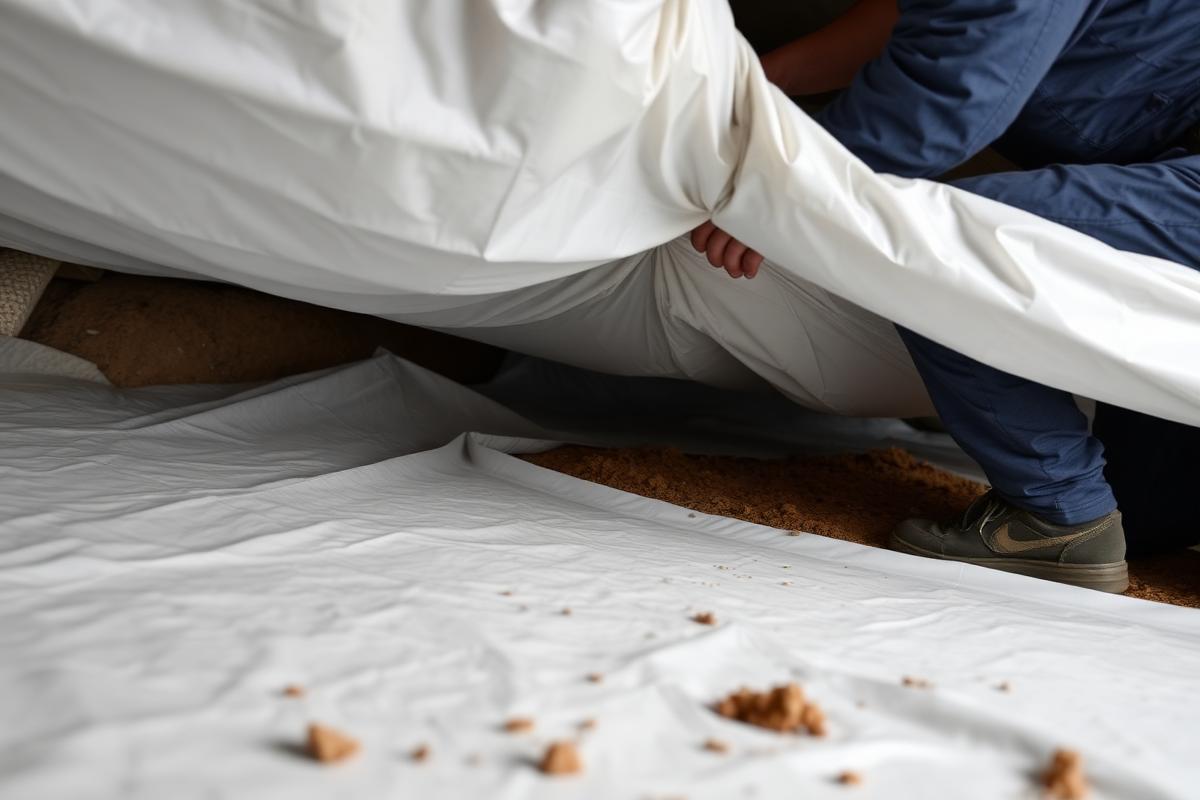
- 5Liner installation: lay and seal the reinforced barrier across the floor, up piers and onto foundation walls.
- 6Air sealing: close and seal foundation vents and the rim joist.
- 7Humidity control: install and drain a dehumidifier sized to the space.
- 8Verification: re-check humidity and moisture readings once conditions stabilize.
Not Sure Whether You Need Encapsulation?
Describe what you're seeing under the house and we'll tell you whether sealing, drainage or repair is the right starting point.
Describe the ProblemWhat affects the cost of encapsulation
Two crawl spaces of identical square footage can price very differently. The biggest variables are the liner thickness specified, whether drainage or a sump has to be added, the capacity of the dehumidifier, how much debris and old material has to come out, and how difficult the access hatch and headroom make every task.
Framing repairs, duct or insulation replacement and long condensate runs all add scope. Our crawl space encapsulation cost guide breaks these factors down with realistic ranges.
When encapsulation is not the first step
If the crawl space takes on water after storms, sealing it prematurely just traps the problem under plastic. The same is true for an active plumbing leak or a foundation drainage failure.
- Recurring water in the crawl space after rain — drainage first.
- Standing water under the house — grading and a sump or perimeter drain first.
- Rotted or actively deteriorating framing — crawl space repair first.
Crawl space encapsulation FAQs
- Is a sealed crawl space better than a vented one in Georgia?
- In a humid Southern climate, vents typically bring in moist air that condenses on cooler crawl space surfaces during summer. A sealed and conditioned crawl space removes that source, which is why encapsulation has become the standard approach across Georgia.
- What thickness of vapor barrier is used for encapsulation?
- Full encapsulation generally uses a reinforced liner in the 12–20 mil range rather than the thin 6-mil sheeting used as a basic ground cover. Thicker reinforced liners resist punctures from piers, rock and foot traffic during future service visits.
- Do the foundation vents get closed?
- Yes. Once the ground and walls are sealed and humidity is being managed mechanically, the vents are closed and sealed. Leaving them open would keep feeding humid outside air into the space.
- Does encapsulation include a dehumidifier?
- Not always, but frequently. If humidity readings after sealing stay in an acceptable range, a dehumidifier may not be required. In most Georgia crawl spaces with ductwork below the floor, a dedicated unit is the reliable way to hold humidity steady.
- Can encapsulation be done if the crawl space floods?
- Not as a first step. Liquid water intrusion has to be resolved with grading, drainage or a sump system before the liner goes in — otherwise water simply runs on top of the barrier.
Related pages
Free estimate
Tell us what's happening under your house
Crawl space pricing depends on square footage, access, moisture source and how much repair work the framing needs. We inspect first, then quote the scope that actually solves the problem — not a package chosen before anyone looked.
- On-site inspection of drainage, grading, vapor barrier and framing
- Humidity and moisture readings where they matter
- Written scope showing what is required and what is optional