Drainage systems
Crawl Space Drainage in Georgia
When water reaches the crawl space faster than the soil can take it away, it has to be collected and moved. Drainage design starts with knowing whether you are dealing with rainwater, groundwater or a plumbing failure.
Rainwater, groundwater or a leak?
Timing tells you a great deal. Water that appears within hours of a storm and recedes afterward is surface runoff. Water that arrives slowly and persists through wet seasons is groundwater. Water that appears without rain at all is usually plumbing — a supply line, drain line, water heater or an air handler condensate line.
Each has a different remedy, which is why we trace flow paths, staining and silt lines during inspection instead of assuming.
Drainage components we install
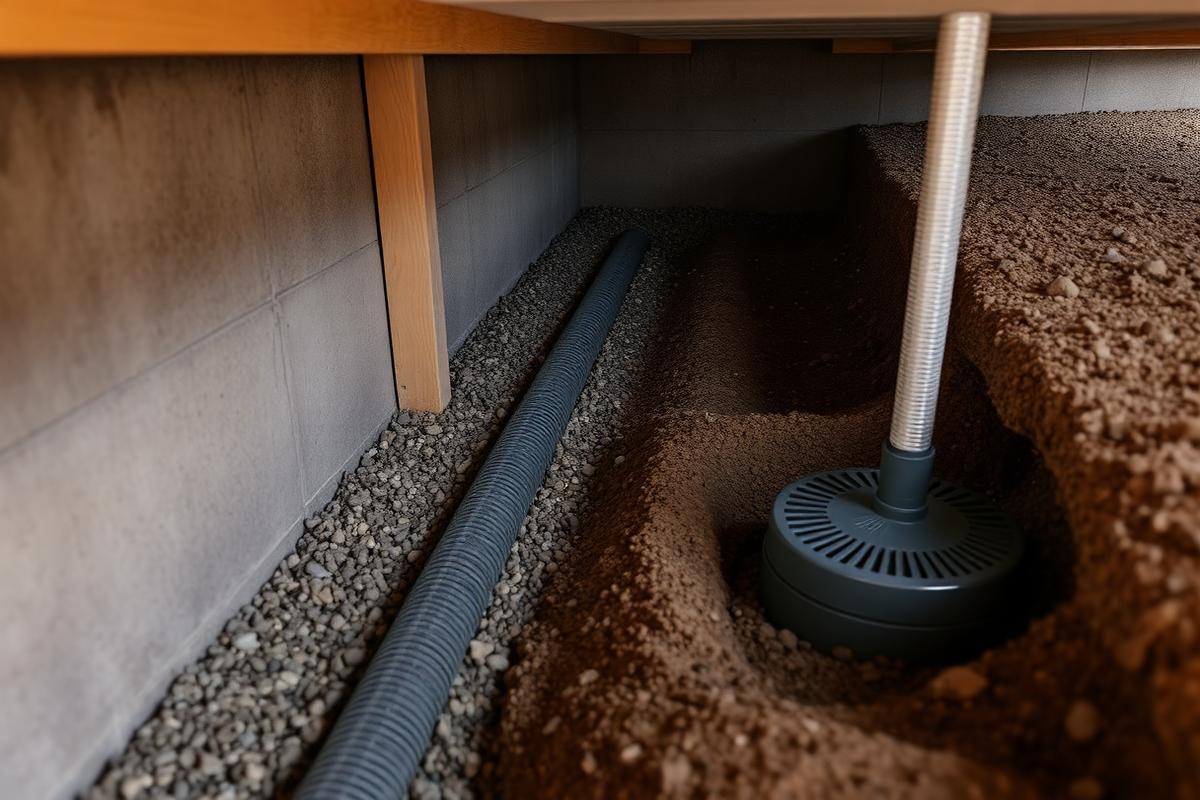
- Interior perimeter drain. Perforated pipe in washed gravel along the inside of the footing, collecting water before it spreads across the floor.
- Sump basin and pump. A sealed basin at the low point with a pump and check valve, discharging well away from the foundation.
- Discharge routing. Solid line carrying water far enough from the house that it does not return.
- Exterior corrections. Re-grading, downspout extensions and surface swales so less water arrives in the first place.
- Sealed liner over the drained soil. A vapor barrier installed after drainage, so the barrier is not floating on water.
Standing water: what happens if it is left
Water sitting under a house keeps the soil saturated, which keeps humidity high and wood damp. Insulation absorbs it, ducts sweat, and the framing stays in the conditions that lead to structural repair work. Read more on standing water under a house and water in the crawl space.

Water Coming Back After Every Storm?
We trace the entry point before quoting a drainage design, so you are not paying for a system that treats the wrong source.
Get a Free Crawl Space EstimateInstallation process
- 1Inspect the exterior for grading, gutter and hardscape issues that send water at the foundation.
- 2Map where water enters and collects inside the crawl space.
- 3Rule out plumbing and condensate leaks.
- 4Trench and bed the perimeter drain along the footing where required.
- 5Set the sump basin, pump and check valve, then route the discharge away from the house.
- 6Restore the soil surface and install the barrier over the completed drainage.
Cost factors for drainage work
- Linear feet of drain line and the difficulty of trenching in Georgia clay
- Whether a sump and pump are required or gravity discharge is possible
- Length and routing of the discharge line
- Crawl space clearance and access hatch size
- Exterior grading or hardscape work included in the scope
Crawl space drainage FAQs
- Do I need a sump pump in a crawl space?
- Only when collected water cannot leave by gravity. On sloped lots a drain line can often discharge to daylight, which needs no power and no maintenance. Flat lots and high water tables are where a sump basin and pump make sense.
- Will fixing gutters and grading be enough?
- Sometimes it is. A surprising share of crawl space water comes from downspouts discharging at the wall and soil sloping back toward the house. We check that first because it is the cheapest correction available.
- How deep does an interior perimeter drain go?
- It is trenched below the level of the finished barrier along the inside of the footing, bedded in washed gravel so water reaches the pipe from all sides. Actual depth depends on footing height and soil conditions.
- Can the drain line clog?
- Properly bedded perforated pipe wrapped against soil intrusion resists clogging, but discharge lines and sump inlets should be checked periodically, particularly after heavy storm seasons.
Related pages
Free estimate
Tell us what's happening under your house
Crawl space pricing depends on square footage, access, moisture source and how much repair work the framing needs. We inspect first, then quote the scope that actually solves the problem — not a package chosen before anyone looked.
- On-site inspection of drainage, grading, vapor barrier and framing
- Humidity and moisture readings where they matter
- Written scope showing what is required and what is optional