Crawl space problem
Standing Water Under the House: Causes and What to Do
Water that pools and stays is different from water that passes through. It means the crawl space has become the low point on the site — and until that changes, the soil under your floor never dries out.
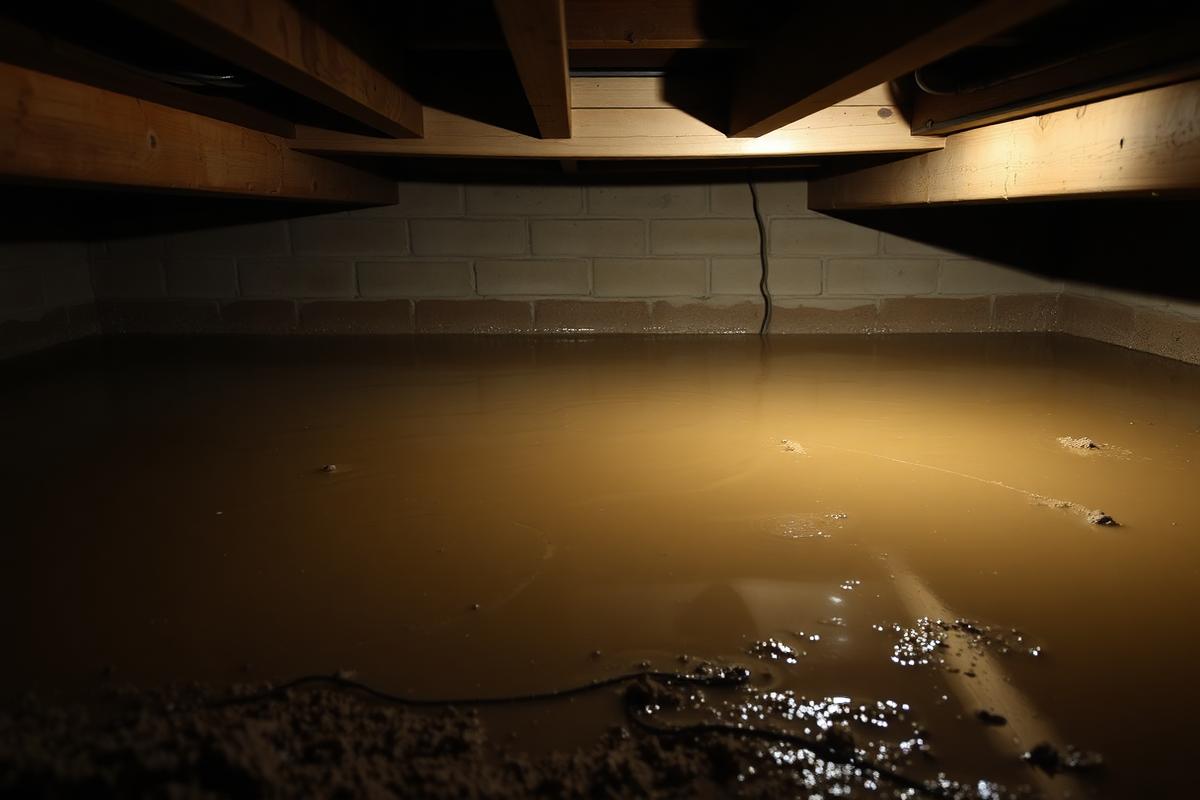
Common causes of standing water
- Negative grading. Soil settled over time and now slopes toward the foundation, delivering runoff to the wall instead of away from it.
- Downspouts discharging at the wall. A single roof plane can send hundreds of gallons directly beside the foundation in one storm.
- Groundwater and a high water table. In low-lying and coastal areas the water table can rise above the crawl space floor after wet weather.
- No interior drainage. Water that enters has nowhere to collect and no way to leave, so it sits in the low spots.
- Plumbing leaks. Slow supply or drain leaks keep an area wet with no relationship to rainfall.
- Blocked or collapsed existing drains. Older drain lines silt up, crush or discharge into a spot that backs up.
Why it persists in Georgia
The soil profile matters. Georgia clay holds water rather than transmitting it, so a crawl space excavated slightly below surrounding grade becomes a basin. On flatter lots in Middle and South Georgia there may be nowhere for a gravity drain to discharge, which is why sump systems are common there.
Vegetation and hardscape play a role too. Patios, driveways and walkways added after construction often change how runoff moves and quietly direct more of it toward the house.
The correct order of repair
- 1Remove the standing water so the space can be assessed.
- 2Determine the source: runoff, groundwater or plumbing.
- 3Correct exterior grading and downspout discharge where runoff is the cause.
- 4Install interior perimeter drainage to collect what still gets in.
- 5Add a sump basin and pump where gravity discharge is not available.
- 6Once dry, complete waterproofing and encapsulation so the space stays that way.
Water That Never Fully Drains?
We'll identify whether you're dealing with runoff, groundwater or a leak — and price only the work that addresses it.
Get a Free Crawl Space EstimateWhen encapsulation is appropriate
Encapsulation belongs at the end of this sequence, not the beginning. A sealed liner is designed to stop soil vapor, not to hold back running water. Installed over saturated soil, it traps water underneath, obscures the source and can leave the space feeling no drier. Once drainage is working and the floor stays dry through a full rain cycle, sealing and humidity control deliver a durable result.
Cost considerations
Standing-water projects usually combine exterior corrections, interior drainage and a sump before any liner work — so they price higher than a straightforward encapsulation. The cost guide breaks down how drainage changes the total.
Standing water FAQs
- Why does water sit under my house instead of soaking in?
- Compacted clay under a crawl space accepts water very slowly, and the soil beneath a house rarely dries the way an open yard does. Once a low spot fills, it can hold water for days or weeks.
- Can I just pump it out?
- Pumping removes the symptom. Unless the water path is corrected, it refills with the next storm and the soil never dries enough to bring humidity down.
- Is standing water a foundation risk?
- Persistently saturated soil around footings and piers is worth taking seriously. It can contribute to settlement and it keeps the wood above it damp continuously.
- How do you decide between grading, drainage or a sump?
- By where the water originates. Runoff is corrected outside; groundwater is collected inside; a sump is added when collected water cannot leave by gravity. Most projects use some combination.
Related pages
Free estimate
Tell us what's happening under your house
Crawl space pricing depends on square footage, access, moisture source and how much repair work the framing needs. We inspect first, then quote the scope that actually solves the problem — not a package chosen before anyone looked.
- On-site inspection of drainage, grading, vapor barrier and framing
- Humidity and moisture readings where they matter
- Written scope showing what is required and what is optional